
ITF TAEKWON-DO CURRICULUM
BLACK BELT PATTERNS
The ITF Black Belt patterns continue the technical and philosophical progression established throughout the color belt curriculum. Each pattern introduces more advanced techniques, combinations, movements, applications, and historical meaning while demanding greater precision, control, and understanding.
Progress through the Black Belt patterns is organized by degree, beginning with the 1st Degree patterns and progressing through the Novice Black Belt curriculum as students advance in knowledge, experience, and responsibility.
NOVICE BLACK BELT
1st–3rd Dan
Instructor Classification: Boosabum (Assistant Instructor)
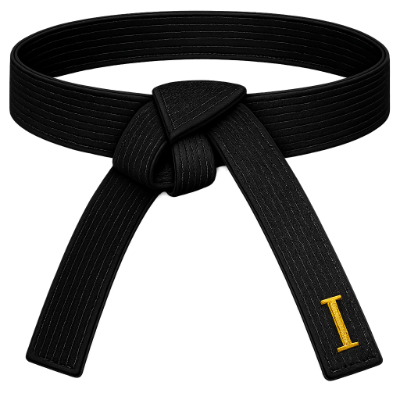
1ST DAN / FIRST DEGREE BLACK BELT
Kwang-Gae · Po-Eun · Ge-Baek
“Opposite of white, therefore, signifying the maturity and proficiency in Taekwon-Do. It also indicates the wearer’s imperviousness to darkness and fear.”
TECHNICAL DEVELOPMENT
First Degree marks the beginning of advanced study in Taekwon-Do. Through Kwang-Gae, Po-Eun, and Ge-Baek, students are introduced to increasingly complex techniques, combinations, and applications requiring greater precision, power, control, and understanding. Each pattern should be carefully studied and refined before progressing to the next.
BLACK BELT DEVELOPMENT
With Black Belt comes an increased responsibility to the dojang and to junior students. Those serving as assistant instructors may begin working with beginner students under the guidance of a senior instructor. Younger or junior Black Belts should focus on becoming positive examples through their attitude, discipline, etiquette, and continued dedication to training.
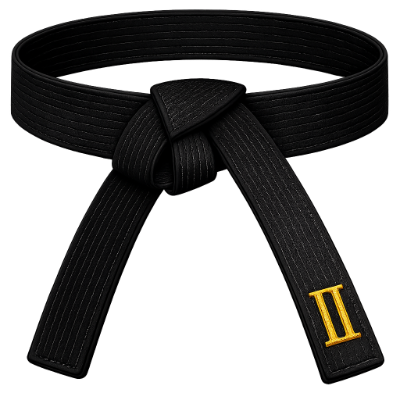
2ND DAN / SECOND DEGREE BLACK BELT
Eui-Am · Choong-Jang · Juche
“By Second Degree, students who have not already done so should begin seeking opportunities to attend an International Instructor Course (IIC) or International Umpire Course (IUC) to further develop their technical knowledge and understanding of Taekwon-Do.”
TECHNICAL DEVELOPMENT
Second Degree continues the progression of advanced Black Belt training through Eui-Am, Choong-Jang, and Juche. These patterns introduce increasingly complex combinations, transitions, and technical demands that require greater precision, control, power, and understanding. Students should continue to refine their previous patterns while working toward proficiency in each new pattern before progressing to the next.
BLACK BELT DEVELOPMENT
At Second Degree, Black Belts should take on greater responsibility within the dojang and continue developing their leadership and instructional skills. Those serving in an instructional role may begin working with intermediate students while becoming more involved in correcting technique, reinforcing curriculum standards, and assisting with the development of junior students. Younger or junior Black Belts should continue building leadership through example, discipline, etiquette, and consistent training.
HISTORICAL PATTERN
Ko-Dang · 39 Movements
“Ko-Dang was originally taught as a 2nd Degree pattern and was later replaced by Juche in the ITF pattern syllabus. Because Ko-Dang remains an important part of Taekwon-Do history and continues to be practiced by some organizations, it is preserved here for historical and technical reference.”
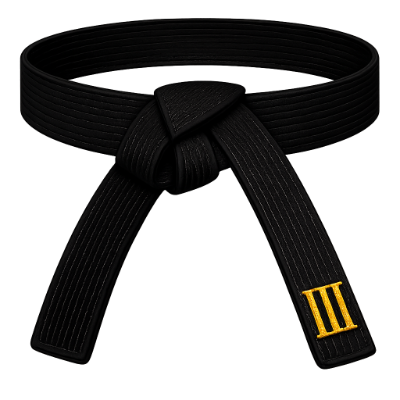
3RD DAN / THIRD DEGREE BLACK BELT
Sam-Il · Yoo-Sin · Choi-Yong
“By Third Degree, students should be actively expanding their knowledge through teaching, seminars, International Instructor and Umpire Courses, competition, umpiring, and continued technical study as they prepare for the transition from Novice to Expert Black Belt.”
TECHNICAL DEVELOPMENT
Third Degree represents the culmination of the Novice Black Belt curriculum. Through Sam-Il, Yoo-Sin, and Choi-Yong, students encounter increasingly advanced techniques, combinations, transitions, and applications requiring a high level of precision, control, power, balance, and technical understanding. Students should continue refining all previous patterns while developing a deeper understanding of the principles and applications contained throughout the Black Belt curriculum.
BLACK BELT DEVELOPMENT
At Third Degree, Black Belts should demonstrate a high level of maturity, leadership, and responsibility within the dojang. Those serving in an instructional role should be capable of teaching and developing students through all color belt ranks under the direction of an Instructor, while helping maintain technical standards and consistency throughout the curriculum. They should also serve as mentors and examples for junior students and developing Black Belts.
COPYRIGHT, SOURCES & USE
Taekwon-Do pattern names, movements, terminology, technical principles, historical information, and related material presented in this library are based upon the teachings and writings of General Choi Hong Hi, including the 15-volume Encyclopedia of Taekwon-Do and the 1999 Condensed Encyclopedia of Taekwon-Do. Source material is presented for educational and historical reference. Embedded videos are presented through their respective third-party hosting platforms and remain the property of their respective owners. Titanium Martial Arts does not claim ownership of the underlying Taekwon-Do system, patterns, terminology, original works of General Choi Hong Hi, or third-party video content.
© Titanium Martial Arts. The original selection, organization, arrangement, layout, presentation, Master’s Tips, instructional notes, original written content, belt graphics, and original or recreated artwork developed for this Pattern Library are proprietary to Titanium Martial Arts and may not be copied, reproduced, downloaded, republished, or redistributed without prior written permission. Links to these pages may be freely shared.